What Are Truffles? A Guide to Flavor, Origins, and How to Use Them
Truffles are among the world’s most prized culinary ingredients, revered for their intense aroma, earthy depth, and ability to transform even the simplest dishes into something memorable. Long associated with fine dining, truffles have gradually found their way into home kitchens, where they are used sparingly to bring richness and character to pasta, risotto, eggs, potatoes, and other understated preparations.
Fresh truffles are rare, seasonal, and highly perishable. Their brief harvest windows and highly specific growing conditions make them one of the most sought-after foods in the world—valued not only for their flavor, but for the tradition, patience, and craftsmanship that surround their use.
Truffles are a type of subterranean fungus that grows underground in symbiosis with the roots of specific host trees, most commonly oak, beech, and poplar. This delicate relationship cannot be replicated easily, which is why truffles cannot be cultivated just anywhere and remain deeply tied to their place of origin.
Where Truffles Grow?
Truffles are found in select regions around the world where soil composition, climate, and tree species align perfectly. The most renowned truffle-producing regions include:
-
France, particularly the Périgord region
-
Italy, with Piedmont, Alba, Tuscany, and Umbria at the forefront
-
Spain, notably Aragón and Catalonia
-
Croatia, especially the Istrian Peninsula
-
Australia and New Zealand, where truffle cultivation follows European traditions
-
The United States, primarily the Pacific Northwest, California, and parts of the East Coast
While many varieties of truffles exist, only a limited number are considered culinary treasures. Among the most celebrated are white truffles, black Périgord truffles, Burgundy truffles, and summer truffles—each offering a distinct aroma, intensity, and seasonal character.
How Truffles Are Found
Because truffles grow entirely underground, they are located by scent rather than sight. For centuries, animals with an acute sense of smell have been used to uncover them. While pigs were once common, today trained dogs are preferred for their accuracy, gentler handling, and reliability. Other animals—including badgers, rabbits, and raccoons—are naturally drawn to truffles as well.
Once detected, truffles are carefully unearthed by hand to protect both the fungus and the surrounding root system. This careful harvesting ensures the area can continue producing truffles in future seasons.
What Do Truffles Taste Like?
Truffles offer a deeply savory, umami-rich flavor that is far more complex than ordinary mushrooms. Their taste is often described as reminiscent of a forest floor after rain—earthy, fresh, and layered—with subtle notes that may evoke nuttiness, garlic, or mineral tones depending on the variety.
Because truffles are prized primarily for their aroma, they are rarely cooked extensively. Heat can diminish their fragrance, which is why truffles are traditionally added at the final moment or shaved directly onto warm dishes just before serving.
Cooking with Truffles: Simplicity Matters
Truffles shine brightest when paired with uncomplicated ingredients that allow their aroma to take center stage:
-
Fresh pasta with butter and Parmesan, finished with shaved truffle or a few drops of quality truffle oil
-
Soft scrambled eggs, gently enriched with truffle aroma
-
Mashed potatoes with butter, cream, and a restrained touch of truffle oil
-
Risotto, finished off the heat with shaved truffle
-
Popcorn, lightly seasoned with sea salt and a hint of truffle oil
Tip: Truffles and truffle oil should always be added at the end of cooking to preserve their aroma and avoid bitterness. Many truffle oils rely on aromatic compounds rather than fresh truffle infusion, making moderation and quality especially important.
The Art of Slicing Truffles
When working with fresh truffles, slicing them thinly is essential. Paper-thin slices maximize surface area, allowing the truffle’s aroma to bloom fully and disperse evenly across a dish. Precision matters—not only for flavor, but for presentation and balance.
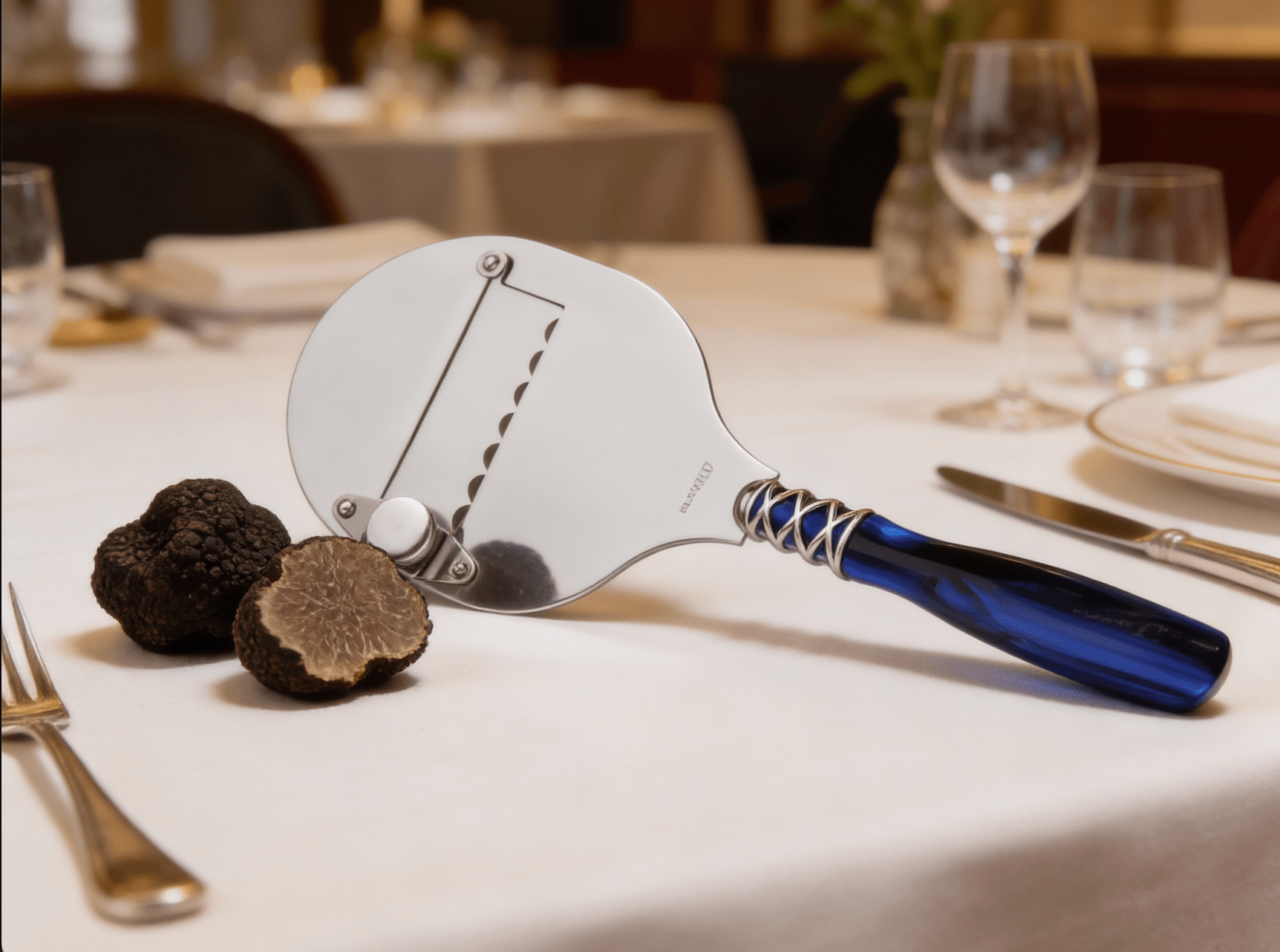
A well-crafted truffle slicer enables controlled, consistent slicing without waste. Bugatti’s truffle cutter is designed with this purpose in mind, offering refined adjustment, balance, and precision. Crafted to feel natural in the hand, it transforms truffle preparation into a deliberate, elegant ritual—where Italian craftsmanship meets one of nature’s most luxurious ingredients.
Why Truffles Endure
Truffles are more than a luxury ingredient. They represent seasonality, patience, and restraint—values at the heart of refined cooking. Used thoughtfully, they do not overpower a dish but elevate it, adding depth and quiet complexity rather than excess.
Whether shaved fresh or enjoyed through carefully chosen truffle products, truffles reward simplicity and intention. When paired with the right tools and a measured approach, they turn everyday meals into lasting experiences—defined not by extravagance, but by craftsmanship and respect for the ingredient.
Featured Product: Arianna Truffle Slicer Blue

To enjoy truffles at their best, you need the right tools. Our Arianna Truffle Slicer Blue is the perfect tool for slicing truffles paper-thin to maximize their flavor and presentation.